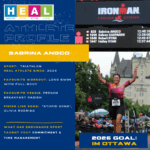
Athlete Profile: Sabrina Angco
September 25, 2026
Your pre-workout nutrition should help you feel ready to train, not leave you wondering whether your stomach is going to cooperate.
One of the biggest pre-workout nutrition mistakes I see athletes make is either not eating enough before a workout or eating too much of the wrong foods too close to training.
And then they wonder why they feel flat, their stomach feels off, or their energy starts to fade halfway through the session.
The good news is that pre-workout nutrition does not need to be complicated. But it does need to match the workout you are about to do.
I see athletes approach pre-workout food in a few different ways. Some avoid eating altogether because they are worried about how their stomach will respond. Others eat a large meal because they assume that more food means more fuel.
Both approaches can backfire.
One of the most common issues I see is eating too much fat and fibre too close to a workout.
Why fat and fibre can be a problem before training
Fat and fibre are important parts of a healthy, balanced diet. They help with satiety, digestion and overall health. But they also tend to slow digestion, which is not always what you want immediately before you start training.
For example, avocado toast, a large bowl of oatmeal loaded with nuts and seeds, or a high-fibre granola bar may be nutritious choices, but they may not be the best choices when you are eating them shortly before a workout.
Your body is still working to digest that food while you are asking it to exercise. For some athletes, that can contribute to bloating, cramping, fullness or other GI issues.
Before a workout, think about accessible carbohydrate
As you get closer to your workout, the goal is generally to choose foods that are easier to digest and provide readily available carbohydrate.
Depending on your preferences and what your gut tolerates, this could be:
- White toast with jam
- A banana
- Applesauce
- A bagel
- Low-fibre cereal
- Other familiar, carbohydrate-rich foods that you know sit well
This does not mean you need to avoid fat and fibre altogether. It simply means that the closer you get to your workout, the more important it becomes to choose foods that are easy for you to digest.
Save the larger, higher-fibre or higher-fat meals for times when you have more time to digest before exercising.
Timing matters too
It is not just what you eat. When you eat it matters as well.
As a general starting point:
2–3 hours before your workout: A more substantial meal containing carbohydrate, some protein and a moderate amount of fat can work well.
30–60 minutes before your workout: Keep it smaller, simpler and primarily carbohydrate-based.
The amount of time you have between eating and training makes a difference too. If you have several hours, you have more flexibility with what you eat. As you get closer to the start of your workout, simpler and easier-to-digest foods tend to work better.
And training on empty is not always the answer
I also see athletes swing in the opposite direction and assume that training fasted is always better.
Fasted training may be perfectly fine for some athletes during shorter, easy sessions. But it is not necessarily the best strategy for every workout.
If you are heading into a longer session, intervals, hills, a hard bike workout, a challenging strength session or another workout that requires more from your body, starting under-fuelled can leave you struggling before you have even hit your stride.
The goal is not simply to eat more or eat less.
It is to eat the right amount, at the right time, for the workout you are about to do.
And this is where individualization matters.
Every athlete’s gut is different. The pre-workout meal or snack that works beautifully for one person may leave another feeling uncomfortable. Finding what works for you takes some trial and error, along with paying attention to how you feel during and after training.
The goal is to develop a pre-workout routine that gives you the fuel you need, without leaving your stomach feeling like it is doing its own workout.